
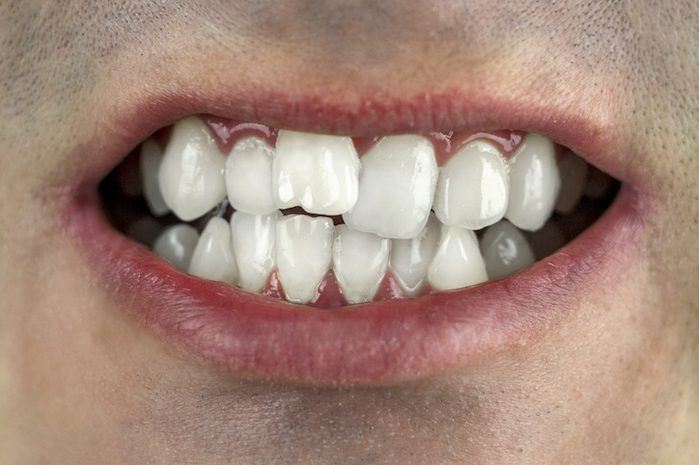
What are crooked teeth?
Crooked teeth are misaligned, overlapping, or twisted teeth that do not fit together properly within the jaw. While misaligned teeth are frequently considered an aesthetic concern, they are also a clinical dental issue that impacts overall oral health, bite alignment, and speech mechanics. Straightening crooked teeth improves visual symmetry while protecting teeth from abnormal enamel wear, plaque accumulation, and jaw strain.
How are crooked teeth treated?
To determine the appropriate treatment for crooked teeth, our team performs a thorough oral examination and utilizes diagnostic imaging to evaluate your bite mechanics. If severe orthodontic or structural issues are present, we may refer you to an orthodontist for specialized care.
We offer several conservative and restorative options to treat crooked teeth:
- Invisalign® clear aligners: Invisalign is our primary method for straightening misaligned teeth. The system uses a series of removable clear aligners that gradually shift your teeth into proper alignment. You switch to a new set of aligner trays approximately every two weeks. Clear aligners offer a less visible alternative to traditional metal braces, require fewer office visits, and allow you to maintain your normal diet since the trays are removed while eating.
- Porcelain veneers: For mild misalignment, porcelain veneers can conceal crooked teeth and balance your bite. Veneers are thin ceramic shells bonded to the front and sides of your teeth, hiding visual crookedness and creating an even biting surface.
- Dental crowns: If a tooth is both crooked and structurally damaged, a dental crown may be recommended. Crowns cap the entire tooth to strengthen its structure and align it with surrounding teeth.
- Dental bonding: Tooth bonding uses a tooth-colored composite resin to reshape minor misalignments, fill gaps, and even out individual tooth shapes in a single appointment.
What causes crooked teeth?
Crooked teeth develop from a combination of genetic factors, developmental issues, behavioral habits, and physical trauma:
- Genetics and jaw size: Inherited genetic traits often dictate jaw size and tooth dimensions. Inheriting a smaller jaw or larger teeth leads to overcrowding, causing teeth to shift out of alignment as they erupt.
- Childhood and oral habits: Prolonged childhood habits such as thumb sucking, tongue thrusting, or extended pacifier and bottle use put continuous pressure on developing teeth and jawbones. In adults, habits such as tooth clenching and grinding (bruxism) exert force that misaligns teeth over time.
- Growth and development issues: As the jaw grows, changes in mouth shape can result in spacing problems or overcrowding. Having extra teeth or missing teeth disrupts natural dental alignment. Additionally, early loss of baby teeth or improper care of primary teeth can cause permanent teeth to erupt misaligned.
- Facial trauma and injury: Physical blows to the face or mouth can dislodge teeth or disrupt jaw alignment, leading to crooked teeth or a misaligned bite.
What are the symptoms of crooked teeth?
Crooked teeth present both visual signs and functional oral health symptoms:
- Difficulty cleaning and plaque buildup: Overlapping or crowded teeth create tight spaces that are difficult to clean with standard brushing and flossing. Food particles and plaque collect in these hard-to-reach areas, increasing the risk of tooth decay, enamel erosion, and gum disease.
- Uneven enamel wear: Misalignment prevents bite forces from distributing evenly across your teeth. Excess pressure on specific teeth leads to premature enamel erosion, chipping, and structural fractures.
- Jaw pain and TMJ discomfort: An uneven bite strains the muscles and joint structures supporting the jaw. This mechanical strain can trigger chronic jaw pain, facial discomfort, headaches, and temporomandibular joint (TMJ) disorders.
- Speech impairments: Misaligned teeth alter how the tongue and lips interact with the teeth during articulation. This can result in speech difficulties, such as lisps or trouble pronouncing specific letter sounds.
- Chewing difficulties: Severe tooth misalignment alters bite mechanics, making efficient chewing uncomfortable or difficult.
Schedule your consultation today in Denton, TX
Straightening your teeth improves both your long-term oral health and your smile’s appearance. Contact us online or call our office today at (940) 213-6754 to schedule your consultation and learn which treatment option is right for you.