
Catching a little pink in the sink when you brush or floss? It’s tempting to ignore it, but bleeding gums are your body’s way of waving a red flag. Often, this is the earliest indicator of gum disease. While it is highly reversible in its initial stages, leaving it untreated can lead to a permanent, debilitating condition that requires lifelong management. At Stone Creek Dental, we provide targeted treatments to stop the infection and restore your oral wellness.
If you notice your gums bleeding regularly, don’t wait for the pain to start. Call our Denton office to schedule a consultation and protect your smile’s foundation.
Schedule Your Consultation Today!
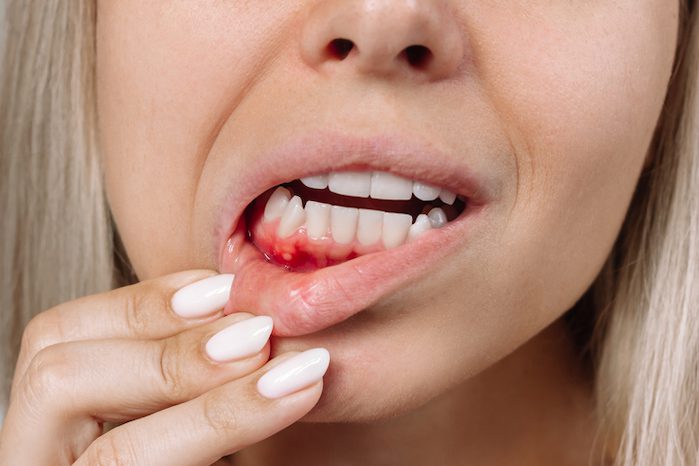
Understanding the Stages of Gum Disease
Gum disease is a progressive infection. Understanding where you stand helps us determine the most effective path for your recovery.
1. Gingivitis
Gingivitis is the first stage of periodontal disease. Your gums may appear red or swollen and bleed easily during your hygiene routine. This is an inflammatory response to the bacteria found in plaque. The good news? Gingivitis is completely reversible with professional cleanings and a boost in your at-home care.
2. Periodontitis
If gingivitis is ignored, it matures into periodontitis. At this stage, the gum tissue begins to pull away from the teeth, forming “pockets” that trap bacteria. These infections begin to destroy the connective tissues and bone that hold your teeth in place. Symptoms often include persistent bad breath, receding gums, and loose teeth.
3. Advanced Periodontitis
This is the final and most severe stage. The destruction of bone and tissue is extensive, often leading to tooth loss. Advanced periodontitis requires aggressive intervention, potentially including surgical procedures to graft bone or restore damaged tissues.
Gum bleeding disease
“Gum bleeding disease” refers to periodontal disease, a progressive bacterial infection affecting the gingiva, periodontal ligaments, and supporting jawbone. Left untreated, chronic capillary bleeding leads to tissue destruction, deep periodontal pockets, and eventual tooth loss.
Bacterial pathogens like Porphyromonas gingivalis compromise soft tissue integrity, making gums bleed under routine chewing forces.
Advanced periodontal disease destroys up to 20% or more of surrounding alveolar bone structure before noticeable tooth looseness appears.
Non-surgical periodontal therapy combines deep scaling with targeted antibiotic application to eliminate pathogenic subgingival colonies.
Dental clinics across Denton, TX provide specialized maintenance protocols every 3 to 4 months to halt disease recurrence.
Professional Treatment Options
The treatment we recommend is tailored to the severity of the infection. Our goal is always to eliminate bacteria and encourage the gum tissue to reattach securely to the tooth.
- Scaling and Root Planing: This “deep cleaning” is the standard for treating periodontitis. We carefully remove plaque and tartar from deep within the gum pockets (scaling) and then smooth the tooth roots (planing). This smoothing process makes it harder for bacteria to colonize the roots and helps the gums heal.
- Laser Dentistry: We utilize laser dentistry to treat gum disease with high precision. The laser’s heat energy sterilizes the gum pockets and removes diseased tissue without affecting healthy areas. This typically results in less pain, minimal bleeding, and a significantly faster recovery time.
- Antimicrobial Therapy: We may prescribe specialized mouthwashes or localized antibiotics to help knock out stubborn bacterial colonies and support the healing process.
How do you know if you have gum disease
You know you have gum disease if you experience chronic red or swollen gums, persistent bad breath, bleeding during brushing, or visible gum recession pulling away from teeth. In Denton, TX, a professional periodontal examination measuring pocket depths beyond 3mm provides a definitive clinical diagnosis.
- Healthy gingival sulcus measurements range from 1 to 3 mm, whereas pocket depths of 4 mm or greater indicate active periodontal attachment loss.
- CDC data reveals that roughly 47.2% of American adults over 30 suffer from some form of periodontal disease.
- Early-stage gingivitis causes chronic tissue inflammation without bone damage, while untreated periodontitis permanently degrades alveolar bone and periodontal ligament structures.
- Periodontists and local dental practices in Denton utilize digital X-rays and probe measurements to catch tissue breakdown before mobility occurs.
Why wont my gums stop bleeding?
Gums fail to stop bleeding because persistent subgingival plaque and hard tartar keep the inner pocket tissues constantly raw and ulcerated. Until a dentist physically scales away these hardened deposits, tissue capillaries remain inflamed and prone to spontaneous bleeding.
- Tartar (calculus) possesses a rough, porous surface that continuously harbors live bacterial endotoxins against fragile tissue walls.
- Aggressive brushing with hard-bristled brushes tears sensitive, swollen gingival margins instead of removing microscopic plaque.
- Vitamin deficiencies (such as Vitamin C or K) and hormonal fluctuations during pregnancy can severely impair blood clotting in oral tissues.
- Professional deep cleaning (scaling and root planing) at a local Denton office physically eliminates the underlying irritants causing prolonged bleeding.
Clinical Authority: The CDC on Diabetes
The Centers for Disease Control and Prevention (CDC) highlights that periodontal disease is a common complication of diabetes. Furthermore, the inflammation caused by gum disease can enter the bloodstream and interfere with how your body uses insulin.
Bleeding Gums FAQs
How can I treat bleeding gums at home?
While you can’t “cure” gum disease at home, you can support healing by brushing gently with a soft-bristled brush and flossing daily. Rinsing with warm salt water can also help soothe inflammation. However, these steps should supplement, not replace, a professional dental exam.
Is it normal for gums to bleed while flossing?
If you haven’t flossed in a while, a little bleeding is common for the first few days as your gums adjust. However, if the bleeding persists for more than a week of consistent flossing, it is a sign of active infection that needs professional attention.
Are bleeding gums a dental emergency?
Generally, bleeding gums are a chronic concern rather than an acute emergency. However, if the bleeding is heavy, won’t stop, or is accompanied by severe pain and swelling, you should contact us immediately for an emergency evaluation.
How long will it take for my gums to stop bleeding?
With professional cleaning and improved home care, most patients see a significant reduction in bleeding within 7 to 14 days. If the disease is more advanced, the healing process may take longer and require follow-up treatments.
Schedule Your Consultation Today
Your gums are the foundation of your smile. Don’t let a reversible problem turn into a permanent one. Call Stone Creek Dental today or schedule your appointment online to get your gum health back on track.